
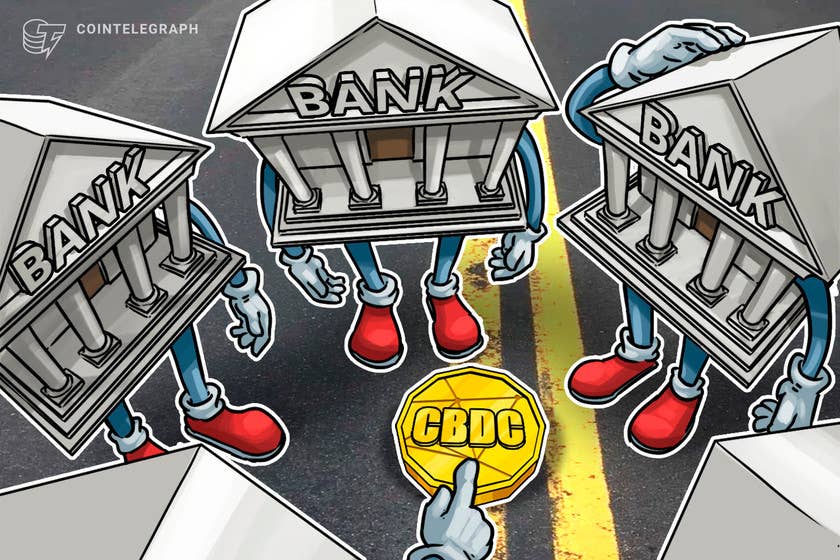
HSBC CEO backs CBDCs against crypto and stablecoins
Banking giant HSBC echoes global stablecoin concerns, calling for regulation to be equivalent to its adoption level.
Banking giant HSBC echoes global stablecoin concerns, calling for regulation to be equivalent to its adoption level.

Blockchain-based startups continue to account for a significant proportion of newly established business entities across the globe.

NFTs (Non-Fungible Tokens) are brought to the world by the blockchain. They are similar to cryptocurrencies, but NFTs are different. Unlike cryptocurrencies, NFTs are unique tokens. They display ownership, source and history on a permanent, transparent, decentralized, secure and open-source database. NFTs are disrupting or on the verge of disrupting numerous fields. To name but a few: Art Collectibles Gaming Real Estate Music Of all these fields, without a double leading the innovation in this space from the beginning are artists themselves. Many of these have had life-changing stories. There is Trevor Jones, the Canadian painter living in Scotland who went from working four jobs to support his art career to selling his Bitcoin Angel for $3.2 million in February, which was at the time a record for the “most expensive open-edition NFT artwork”. There is Ben Mauro, the artist who went from struggling to make ends meet to becoming a millionaire. Another star example is that of Blake Jamieson. He’s a 36-year-old Brooklyn artist whose career exploded when he made over $46,000 in NFTs sales in just over six weeks. He placed his artwork on platforms like SuperRare and OpenSea. He has since partnered with current and former NFL superstars Dez Bryant and Terrell Owens on NFT projects and is continuing to grow his brand. NFTs make this possible because of the decentralized nature of the blockchain. The legacy art industry would require hiring an agent and working to get approval to be displayed in an art gallery. The artist is dependent to a large extent on others to bring their works to the market. In the case of NFTs, any artist can mint their own NFTs and bring them to market. And with the internet, social media and the increasing popularity of NFTs, collectors around the world can connect with the artists they want to collect. From a markets standpoint, art is being connected to a liquid market that it has never seen before. In just the last month alone, on just one exchange, OpenSea, there has been over $4 billion in NFT sales, which is more than the worldwide NFT market size in the first half of 2021. What will the future hold for the red hot NFT space? While no one has a crystal ball, it is clear that there is a robust community of collectors, traders and investors that have brought a very liquid market into play. There will be bull markets and bear markets, but it’s clear that NFTs are here to stay. Enter Bullseum Bullseum is an art project in which 5,000 NFT collectibles were created. This is not a generative project, but instead, each was hand-drawn by a human artist. These collectible bull NFTs are part of a fantasy ecosystem with an ambitious roadmap that will continue to grow and increase in features. Some of what this will include: Artists competitions NFT airdrops A video game A cryptocurrency token One of the most attractive uses of blockchain is creating a fair decentralized economy where creators can be rewarded for their creations, instead of being dominated by central institutions, gatekeepers, and middlemen. Bullseum stays true to this by creating an ecosystem that incentivizes artists, investors and traders to participate in it. For investors, the project has an attractive aspect due to the fact that it is still very early. Those who want to participate in the ecosystem now can still get in at a floor price of 0.1 ETH. As part of the project’s roadmap as featured on their website, there will be a series of NFT airdrops that will give holders a chance to win more NFT collectibles. Holders also will be given an opportunity to vote in a series of community votes to help guide the direction of the project. As of this writing, the community is actively growing, with about 10,000 members on the Discord chat.
The Chairman of the Securities Exchange Commission, Gary Gensler, showed his cards. He spoke with legacy-media-operation The Washington Post and host David Ignatius for their series “The Path Forward” and spilled the beans. We at NewsBTC saw the whole interview so you don’t have to. We selected the most crucial quotes, and present them in all their splendor for you all to read them and reach your own conclusions. Of course, we’re going to offer our two cents. We’re not made of steel. In general, though, you’ll get Gary Gensler’s unadulterated words. They’re shocking enough as it is. Gary Gensler Is Looking Directly At Stablecoins Even though host David Ignatius had no questions about stablecoins, the topic was on Gensler’s mind. The SEC’s Chair brought it up a couple of times. First, he said: “On something called stablecoins, and how the banking agencies–and we, too, market agencies–coordinate because these stablecoins may have attributes of investment contracts, have some attributes like banking products, but the banking authorities right now don’t have the full gamut of what they need.” But his organization is not only thinking about stablecoins and trying to define them and isolate their attributes. They’re preparing a formal document: “We’re working right now under the guidance of Secretary Yellen and working on a report around stablecoins, and in the world of stablecoins, I do think that there would be some help from Congress.” This doesn’t seem that bad. Their report could conclude that stablecoins are a useful innovation and tool that the whole financial system can benefit from, right? Wrong. This is what Gensler and the SEC think about stablecoins, and pay attention to the language: “These stablecoins are acting almost like poker chips at the casino right now; so, add to the Wild West analogy. I mean, we’ve got a lot of casinos here in the Wild West and the poker chip is these stablecoins, you know, at the casino gaming tables.” Things are about to get interesting for stablecoins, it seems. USDT Market Cap by Cryptocap | Source: USDT on TradingView.com Does The SEC Want Crypto Exchanges To Register? Look, there are no two ways about this. Gary Gensler wants all exchanges, including decentralized ones, to register with the Securities Exchange Commission. To convince them, he asks for the exchanges to come to him: “I think it would be better–the platforms that are trading securities, the platforms that have lending products, who have what’s called “staking products,” and I’m glad to describe that for your listeners, but where you actually put a coin at the platform and you earn a return–that they come in and we sort through, figure out how best to get them within the perimeter.” And, you might ask, what perimeter is that? Well, this quote makes it very clear: “I think at $2 trillion, 5- or 6,000 projects, that it would be better to be inside investor-consumer protection, inside the tax compliance and anti-money laundering and financial stability.” This goes in line with recent declarations from Gensler about the need for crypto regulation: “Gensler believes that if the market is to grow, then it needs to embrace regulation. The SEC chairman explained that regulation would provide trust in the market, which is important if the market does not want to become irrelevant over time. “Finance is about trust, ultimately,” Gensler said. Gensler’s focus is mostly on trading platforms, given that this is where the majority (~95%) of activities in the crypto market are carried out.” Is Gary Gensler Even a Cryptocurrency Enthusiast? Since the new Head of the SEC once taught a class on Cryptocurrencies at MIT, people assumed he would be a pro-crypto legislator. Is he, though? Let’s read what he said about the subject specifically: “I do think this new technology is a very interesting–and whomever she was, Satoshi Nakamoto, it’s led to change. It’s pushing at the side of central banks around the globe to reconsider how to provide payment systems. It’s pushing on the side as a catalyst for change in finance, so-called “fintech,” the intersection of new technologies and finance.” So, a non-comital opinion. However, Gensler feels strongly about bringing cryptocurrencies into a public policy framework. So strongly, that he said, “I don’t think technologies long last outside of a social and public policy framework.” And then, “I think it’s better to bring it inside the public policy framework and ensure that we address these important public policy goals.” And later on one more time, “So, new technology is generally a good thing; it challenges the establishment. But I don’t think that new technologies really long exist outside of public policy frameworks.” Does Any Of This Have To Do With Evergrande? Days after our report about the situation, Evergrande became one of the biggest stories of the year. We explained that the company reportedly owes $300B, and the most likely cause for all that: “Apparently, China Evergrande was caught in a loop. The company was pre-selling apartments and using that money to fund other projects, in which they also pre-sold the apartments and the cycle started again. Evergrande bonds are suspended, and there’s a chance they won’t be active ever again. They might be worthless. The stock is near its all-time low, it has lost nearly 80% of its value this year.” Of course, The Washington Post’s Mr. Ignatius had to bring the subject up. He said that analysts are worried that there could be “contagion in financial markets, like what we remember from 2008 and the failure of Lehman Brothers.” Then, he asked: “Are you confident that our financial markets today are protected in the event that there was such a failure, not necessarily over this company but any large company with that level of debt?” Gensler refused to comment on a Chinese company, that’s out of his jurisdiction. To the question, he answered: “I do think the reforms after the 2008 crisis stood up a much stronger U.S. financial system. It doesn’t mean that there aren’t issues that we look at, at the SEC and other important regulators like the Federal Reserve and the bank regulators and CFTC, that I once was honored to chair. But I do think that we’re in better position in 2021 to absorb some of those shocks than we were prior to the ’08 crisis, but it doesn’t mean we’re isolated. Our economies are connected around the globe.” Featured Image: Screenshoot from the interview | Charts by TradingView

I've noticed yesterday in the Daily Discussion thread that lots and lots of people were panicking and saying stuff like "omg we going to 20k" and all that. This correction was about 20% to Bitcoin and 30-40% to altcoins. This, generally speaking, isn't a lot, we had the May correction, which was about 60% to…
Read more
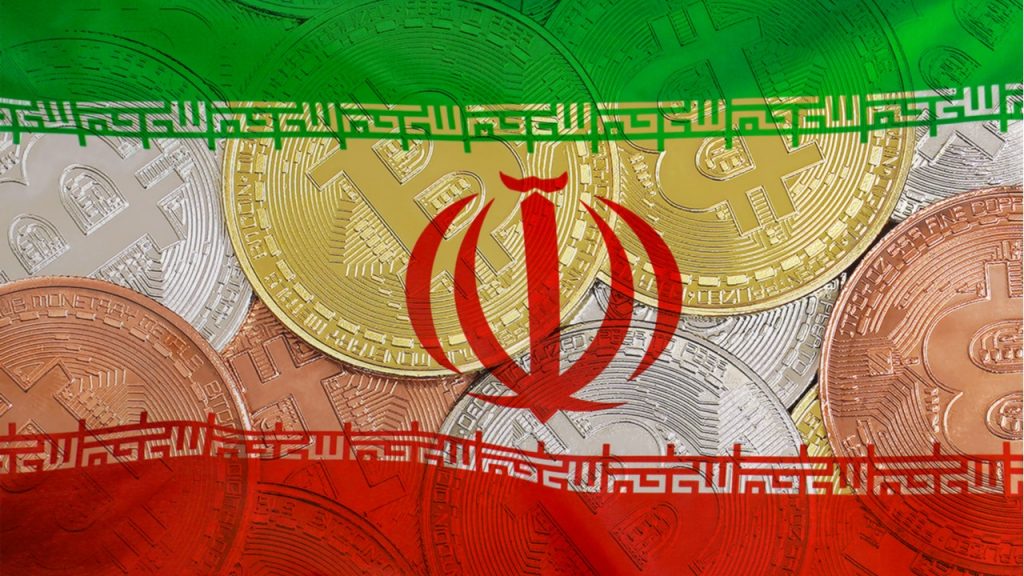
Members of the Iranian parliament, the Majlis, have voiced concerns over Tehran’s restrictive policies towards innovations such as cryptocurrencies. Following the release of a study recommending a new approach towards the crypto industry, the lawmakers have called for the adoption of friendlier regulations. Iranian MPs Urge for Change in Crypto Policies After Research Some parliamentarians […]
https://bitinfocharts.com/comparison/dogecoin-transactions.html#alltime This is why DOGE was nothing else than FOMO and viral investing. This is why DOGE will fall from the Top10. Will it come back? Sure, after crashing to 1 cent, the viral cycle can start again. And it will be temporal again. 15474 transactions. The lowest in almost 4 years, in the middle…
Read more
Waggle Network, a cross-chain protocol that unlocks liquidity for post-IDO tokens, has announced a $3 million seed raise by leading investors including (but not limited to) GBV, SVC, Genesis Block Capital, Basics Capital, Bixin Ventures, NGC, AU21, Gate.io labs, MEXC, HG Ventures and Spark Digital. Waggle has also announced the addition of strategic partners such as Solanium, Occam, and Poolz.finance to help foster the company’s multichain approach, as well as media partners Minted Labs, ODaily, CrryptoTimes, Bitcoin Addict, and Bigcoin Vietnam. With each investor and partner, Waggle unlocks the potential to tap into thousands of portfolio projects and deep industry expertise from top Web3 investors and builders. Waggle’s founding team brings heavy experience in DeFi along with the first-hand experience with some of the major pain points that inspired Waggle’s creation. Conventionally, projects have limited alternatives to raise funds after their IDO. Most projects will raise funds via OTC deals with institutional partners, which sometimes present them with less-than-favorable sales terms due to the illiquidity of such deals. Waggle saw these pain points and noticed the fervor of the communities of these projects. Waggle was therefore born to bridge this market inefficiency and facilitate fundraising through the project’s very own community. Not only is Waggle unlocking liquidity for projects to further their innovation, but the company will also bring deals, previously exclusive to institutional investors, to the community. A representative at VC fund AU21 says, “As the crypto market booms, and technological innovation within the sector reaches new heights, we feel that it is patently important for locked and restricted tokens to be valued in public markets. The Waggle Network introduces much-needed liquidity to assets held by project teams while keeping a close eye on project quality for prospective investors.” A representative at Genblock Capital adds, “The inability to unlock value from vested tokens is a challenge shared by many project founders and early supporters. Genblock is excited to be supporting the team at Waggle, who are building the protocols and tools that will enable project founders to access capital from their illiquid vested tokens. This will provide a new source of funding for early-stage projects, as well as widen access to exclusive private sales for the retail community.” Waggle will be announcing more details soon around upcoming challenges, airdrops, IDOs, and liquidity mining programs designed to provide a strong go-to-market launch for the company.
Nasdaq listed engineering company ZK International (ZKIN) is proud to announce a partnership between xSigma collectibles–their blockchain-based subsidiary– and ACES, a top American baseball agency, to launch NFTs on behalf of their Athletes using MaximNFT. Formed in partnership between xSigma and Maxim magazine, MaximNFT is a marketplace for buying, selling, and creating new Non-Fungible Tokens (NFTs). Users can find the platform’s website at maximnft.com MaximNFT’s most recent deal will have ACES’s athletes represented on their platform through the power of NFTs. ACES is a Brooklyn-based agency representing some of baseball’s top talent. Forbes ranks them as one of the three most powerful in the sport while listing its co-owners Sam and Seth Levinson as some of the ten most powerful agents. ACES has spent over 30 years representing baseball professionals at varying points in their careers and has negotiated for over $4 billion in deals. ACES will work closely with the xSigma team– owners and operators of the MaximNFT platform– in the development and launch of these NFTs. xSigma is a blockchain R&D lab that includes former developers of top companies such as Google and Amazon. They will provide the creative and technical support of their veteran engineering team to help the agency navigate the novel and ever-changing NFT space. “This is a serious step and a great partnership for MaximNFT,” says Jon Orlando, CEO of MaximNFT. “ACES is one of the most powerful baseball agencies and we look forward to revolutionizing the industry of sports collectibles together.” Peter Pedalino, a principal at ACES, feels equally as excited for the opportunity NFTs can present to his agency. “The NFT Industry is clearly going to be a major component in the future of the Sports Collectible Space. We want to lead in this evolution, and we are happy to have support from the MaximNFT’s team on this path.” MaximNFT will go live with an exclusive NFT suite featuring top celebrities, brands, and athletes later this Fall. The collection will form a fitting thematic combination with the brand and promoter of the platform, Maxim Magazine. Maxim is a globally leading men’s lifestyle magazine of 25 years, covering the latest in cars, travel, wine, fashion, entertainment, and beautiful women. The publication will utilize its millions of readers in 75 countries to promote MaximNFT.com and its unique digital collection. About MaximNFT.com MaximNFT is an innovative new NFT marketplace for buying, selling and creating NFTs. It offers unique digital collectibles of high-profile brands and figures and is supported by never-before-seen NFT trading features. One of these features is known as “NFT tokenization” which lets users break down an otherwise unique digital collectible into fractional parts, and share it among the NFT community. NFTs bought and sold with MaximNFT can be exchanged on multiple top blockchains, including (but not limited to) Polkadot, Ethereum, and Binance Smart Chain. By combining xSigma’s masterful engineering with Maxim Magazine’s promotional power, MaximNFT is poised to make an important name for itself in the growing NFT markets, which have amassed billions of dollars in transaction volume in 2021. The marketplace will feature a special focus on celebrity, sports, and gaming-themed digital collectibles. Predicting a rise of NFT adoption within the gaming industry, xSigma already plans on developing AR and VR compatible NFTs. About xSigma xSigma was established as ZK International (Nasdaq: ZKIN)’s blockchain research and development arm in 2018, finding solutions to real-world infrastructure issues and assisting with supply-chain management. Today, however, xSigma has shifted towards independent DeFi, stablecoin, NFT, and DEX product developments. With an elite development team featuring former members of Google, Facebook, and RippleLabs, their goal today is to create financial tools that help the DeFi industry flourish. About Maxim Maxim is a world-renowned men’s lifestyle magazine of 25 years. They provide content covering cars, travel, and women, and their covers of featured A-list female celebrities including Megan Fox, Angelina Jolie, Shakira, Beyonce, and many more. The magazine is read by over 10 million men across 75 countries every month across Maxim’s print, social, and digital media outlets.
submitted by /u/ieatair [link] [comments]