Author: dfmines

Cryptocurrency News and Public Mining Pools

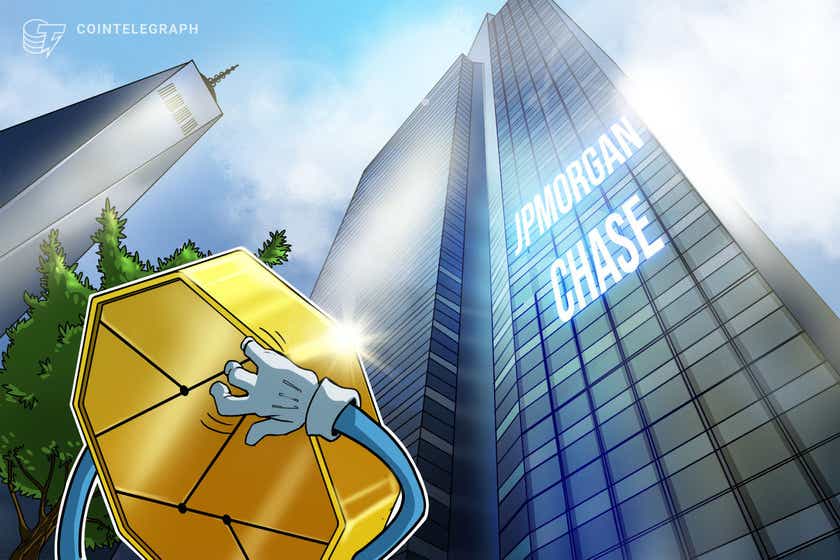
Uniswap founder's bank account shut down by JP Morgan Chase, shadow-debanking allegations surface

Banks do not need to provide an explanation when shut down accounts owned by clients deemed “too risky,” according to former CFTC commissioner Brian Quintenz.

Market Sentiment Crumbles As Sell-Offs Drags Bitcoin To $33,000

The current market crash is no doubt one of the hardest to hit in recent times. Bitcoin as well as other digital assets have suffered massive dips as a result of the crash. For Bitcoin, the pioneer cryptocurrency has had more than 50% of its all-time high shaved off in the last two months. This has caused it to hit new six-month lows as its price crashes to $33,000 for the first time since the summer. Market sentiment has since nosedived in accordance with the movement of the market. As investors become increasingly wary of the market, more so than it was during the crash in May, sentiment has skewed entirely into the negative. The Fear & Greed Index puts this into perspective with its current rating as it now sits at one-year lows, crashing to 11 on the scale. Related Reading | Ethereum Fee Averages Remain Above $30 Despite 35% Drop. Price Pump Incoming? Fear & Greed Index Goes Haywire The Fear & Greed Index has been consistently declining into the negative as bitcoin and others have continued to record massive fluctuations. Now, though, the index has gone completely berserk as it crashes into one of the lowest recorded points. On Sunday, the Fear & Greed Index hit a score of 11, completely registering sentiment in the negative as it dived into extreme fear. The following day has not come with much good news as the Fear & Greed Index still shows that investors are very wary of the market. The index currently sits at 13 at the time of this writing, a mere 2 points higher than its weekend low of 11. Nevertheless, the Fear & Greed Index has now spent a week in extreme fear as last week concluded with the index in the same territory. Fear & Greed Index remains in extreme fear | Source: alternative.me Sell-offs remain the order of the day with investors scrambling to save themselves from more losses. It looks to be what is the start of another stretched-out bear market, as the last time something like this occurred was in 2018. After this, the market did not recover for another two years. If history is anything to go by, then the downtrend may not be over, with some predicting the bottom to be as low as $10,000. Bitcoin Liquidations Rack Up Amidst the sell-offs and price crash has been massive liquidations. Bitcoin long traders have naturally borne the brunt of the recorded liquidations with hundreds of millions of dollars in longs liquidated in the space of 24 hours. BTC liquidations racked up to $390 million in a single day, while the 12-day chart looks even worse with more liquidations taking place. Related Reading | Bitcoin Breaks $37,000, Why Downtrend To $29,000 Is Likely In total, there have been over $283 million in bitcoin liquidated in the last 12 hours. Longs have made up 80.8% of all liquidations according to data from Coinglass. OKEx, Binance, and FTX maintain the lead for exchanges with most liquidations as the majority have occurred on these platforms. BTC recovers to $34k | Source: BTCUSD on TradingView.com Bitcoin’s price continues to trend low, touching $33,000 in the early hours of Monday. Twitter is abuzz with talk of the bitcoin crash with #BitcoinCrash trending. The digital asset is now trading at $34,200, with indicators pointing towards further dips. Featured image from Unfinished Success, charts from alternative.me and TradingView.com

Scary stuff: JPMorgan Chase closes Uniswap founder’s bank accounts

submitted by /u/patosuave [link] [comments]

Guess who doesn’t care about crypto price crashes? The investors pouring billions into the sector, the hundreds of banks about to offer trading services to their clients, and devs actually building better, faster, cheaper alternatives to what is being used today.

Here's some food for thought. Major investors like VC and private equity funds, put their money into projects with a roughly five year time horizon (when they have to pay back their investors.) Literally billions of dollars have flowed into the crypto markets in January, 2022 alone. Temporary price movements have little to no effect…
Read more

The great renaming: what happened to Eth2?

submitted by /u/domotheus [link] [comments]

Enjoy $ without IRS ruining the fun

Hypothetically, you have thousands of ETH that you would like to cash out for US$. How would you proceed while making sure you never have to justify the source of the ETH to US government agencies? Moving out of the US is possible. submitted by /u/bazbour [link] [comments]

Timechain DEX Introduces Liquidity Pools & Farming Features on Its Automated Market Maker (AMM)

Decentralized financial ecosystem, Timechain announced the launch of new features to its decentralized exchange (DEX), this Monday, bringing the world of decentralized finance (DeFi) to its users. The new DeFi features include staking, liquidity pools, yield farming, and permissionless lending and borrowing. Additionally, users will be able to swap thousands of cryptocurrencies on multiple blockchains including assets on Binance Smart Chain, Ethereum, and Fantom ecosystems. Since the start of 2020, the DeFi ecosystem has soared exponentially in value as developers introduced new ways for users to make their capital work. In 2021, the industry further blossomed as Layer 1 scalability solutions such as Solana and Layer 2 solutions including Polygon, Fantom, and Avalanche were built on Etherum, reducing the gas costs and transaction times greatly. According to DeFi Pulse data, the total locked value (TVL) DeFi ecosystem has grown from $10.5 billion in January 2020 to a high of $112 billion in November 2021, representing almost 10X growth during the period. One of the leading applications of DeFi supporting the gargantuan growth is the rise of automated market makers, or AMMs. They allow investors and token holders to use their tokens to provide liquidity, earn returns and concurrently increase demand for the native token exchange. The latest upgrades on Timechain’s DEX are set to improve the efficiency of its AMM while offering an industry-spread aggregator to enable users to find the best and cheapest swapping routes across all integrated platforms. As mentioned above, the DEX also introduced AMM liquidity pools, staking functionalities, peer-to-peer lending & borrowing services, and yield farming. These services provide liquidity to the platform, support its native utility token, $TCS, and promote other tokens that wish to leverage its infrastructure. Timechain’s new liquidity pools will also offer users who stake on the platform rewards, paid out in $TCS, from the fees generated by trades on the platform. The base trading fee of 0.3% will be applied to each trade, with 0.2% returned to liquidity providers and 0.1% going to Timechain’s TCS Buyback program. To add liquidity to the liquidity pools, users will need to provide an equal value of the two tokens within the pair, for instance, on the TCS/FTM pool, you will need to provide 50% TCS and 50% FTM, of the value you have. You’ll then receive LP tokens that represent your share of the pool, These LP tokens then generate rewards, proportionally to the trade fees generated. Available liquidity pools at launch include TCS/FTM, TCS/USDC, TCS/DAI, FTM/USDC and FTM/DAI. Furthermore, these LP tokens can also be deposited on yield liquidity farms to earn additional rewards in $TCS.  The liquidity farms are designed to incentivize users to provide liquidity to TimechainSwap and offset the risk of impermanent loss. Users will be able to harvest their rewards at any time. Finally, with the DeFi ecosystem revolutionizing the finance industry, platforms in the industry are continuously innovating to give users the best possible rates and utility for providing liquidity. Timechain swap staking feature, will give users a way to stake their $TCS into the $TCS single asset staking pool (SSP) and earn $xTCS rewards over time. This means you will earn rewards by staking your rewards!

Three Emerging NFT Platforms That Offer Yield Earning Programs

Non-Fungible Tokens (NFTs) have taken over the web3 space. Their popularity is second to none, as web3 enthusiasts have created an industry that has taken the world by storm. Use-cases have shifted from purely digital art marketplaces to certificates and even yield earnings. Digital art still dominates NFT uses. That will change. The Decentralized Finance (DeFi) space has figured out that NFTs have many product use-cases within the industry. NFTs get used as assets on several DeFi platforms. Before now, fungible tokens, stablecoins, and other digital assets reigned supreme. The entrée of NFTs has changed the game because of their unique nature. Here are a few yield-earning NFT platforms that will rock 2022 and beyond. Drops Offers Permissionless NFT Lending Pools And More Recently launched NFT lending pool Drops has taken things up a notch and created permissionless lending pools. The basic idea behind Drops is to allow DeFi token and NFT holders to gain access to liquidity rather than for NFTs to sit idly in user wallets. Different NFTs used for collateral range from collectibles, gaming NFTs to financial NFTs. The NFT space goes through illiquid phases because of sales pressure. It has led to bubble-like behavior in the NFT space that occurs periodically. As a result, many users get stuck with their NFTs without selling them at their desired timelines. Drops provides a way out for collectible and financial NFT owners by giving them access to permissionless yield pools where they offer their NFTs as collateral. The great thing about this feature is there is no approval process required for getting access to the loans. The Drop token (DOP) enables governance within the Drop’s Decentralized Autonomous Organization (DAO). Access to the pool yields occurs once users connect to the DApp. Izumi Finance Solves Issues With Uniswap’s V3 Finance NFTs Izumi Finance, the multi-protocol programmable liquidity finance “Liquidity as a Service” (LaaS) platform, enables DeFi users to deposit their Uniswap LP NFTs on the Izumi protocol. The Izumi Finance ecosystem enables liquidity mining from different chains and increases yield optimization. It allows users to increase the returns on their LP NFTs efficiently while allowing users the flexibility of earning on Uniswap v3. As the first protocol that supports Uniswap V3, Izumi Finance has taken the bull by the horns and created a new paradigm of operations for liquidity mining in the DeFi space. Izumi Finance deploys the use of its iZi tokens to improve marketplace efficiency. By connecting providers (DeFi projects) with liquidity providers, Izumi Finance enables an environment where the ordered distribution of yields is available to liquidity providers. This approach, for LP NFTs, has raised the bar and created a new perspective on liquidity mining. Izumi Finance takes things to a whole new level and solves the problem of impermanent loss. Uniswap V3 Allows Users to Stake LP NFTs Uniswap V3 launched last year, but with a twist. Rather than allow users to deploy their DeFi tokens to gain yields, LP NFTs get minted, and yields get earned on each minted NFT. Users deploy the LP NFTs to access pools available within the Uniswap V3 D’App. Although Uniswap V2 is still available, users piqued by the idea of having a yield-generating financial NFT have flocked to the platform and staked their Uniswap LP NFTs. As the cryptocurrency space increases in value and prices of Smart Contract capable blockchains like Ethereum rise, yields shall improve with efficient models gaining ground. Will Yield-Earning NFTs Gain Adoption in 2022 and Beyond? With a renewed interest in financial NFTs, many DeFi users wonder if yield-earning NFTs will become popular. Skeptics think these kinds of financial NFTs are complicated and present many problems. Because of the unique nature of NFTs, the DeFi space will see new NFT platforms that offer yield generation at fair or even increased rates. The rarity of each NFT determines the value generated and the potential yields. It shall become another niche product that produces higher yields as each unique circumstance governing every minted NFT determines the outcome yield-wise. The new products made possible by these platforms will spur further adoption of web3 technologies. It is one more plus for the industry. Image: Source

For everyone who is freaking out right now I would like to point out that in the last year Bitcoin is up 4.42% while Amazon is down 15%

I know you people have the attention span of hamsters but lets keep things in perspective In the last 365 days Bitcoin is up 4.42% in that same span of time Amazon is down 15% https://preview.redd.it/h4mqz840pnd81.png?width=790&format=png&auto=webp&s=cb6fc7911039289e88ae93d513d72cf199c562a7 ​ ​ But I know what you're all thinking 365 days is a long time. How can you possibly…
Read more