

Price analysis 1/26: BTC, ETH, BNB, ADA, SOL, XRP, LUNA, DOGE, DOT, AVAX
Bitcoin and altcoins are in a strong relief rally, but overhead resistance levels and expected comments from the Federal Reserve could impact the recovery.
Bitcoin and altcoins are in a strong relief rally, but overhead resistance levels and expected comments from the Federal Reserve could impact the recovery.

Stellar (XLM) records a positive performance in 24-hours as the crypto market in general recovers from its sell-off. As of press time, XLM trades at $0.20 with a 4.8% profit in the last day. Related Reading | Stellar Development Foundation Launches New Account Model, How Users Will Benefit On January 25th, Stellar Development Foundation (SDF) Vice President of Technological Strategy Tomer Weller announced via Twitter the integration of smart contract on this network. With a tentative deployment date set by the end of 2022, this addition could transform XLM’s ecosystem and use cases. As Weller clarified, the SDF aims for a “feature-complete test network” for that period. However, he believes “the ecosystem” most decide when to roll-out smart contract capabilities on Stellar. Weller will host a Twitter Space today at 12:00 Pacific Time (PT) to provide more details. Weller said: Stellar enables equitable access to the financial system. DeFi is becoming a major part of that system. DeFi isn’t new to Stellar. It’s been core to the protocol with a built in DEX from the get go (before “DEX” was popularized), and AMM functionality became available in ‘21. The logical step of that development is to support the introduction smart contracts, Weller said, and take DeFi on Stellar to “the next level”. These capabilities could aid the network and its ecosystem to fulfill the vision of the SDF by lowering “the barrier of entry”. In addition, developers working on this network will be able to create products with “trust-minimized functionality. More importantly, Stellar will no longer have to implement major protocol changes to deploy a product, dApp, or decentralized service. Weller also claimed the SDF is currently looking at smart contracts programming languages and Virtual Machines (VMs). These could be developed by the SDF or they could use an existing programming language. Who Will Benefit The Most From Smart Contracts On Stellar? The non-profit organization will have three priorities when selecting a programming language, as Weller said: safety, scalability, and equitable access. At the moment, the VP for Tech Strategy believes there is not one “off-the-shelf that fits the bill”. In that sense, he claimed they are currently looking into existing networks and “learning a lot” to evaluate the components that “work”. The Stellar ecosystem will apparently have a voice at choosing this key element of its smart contract functionalities. Weller added: For users, DeFi on Stellar means direct access to a global network of on and off-ramps. The latest player to join, MoneyGram, will provide crypto- >cash conversions in 300,000(!) locations around the world. Related Reading | How Stellar Will Host Ukraine’s CBDC Pilot Test With Tascombank Users stand to be the most benefit from the potential integration with smart contracts. The SDF has also set out to provide developers with a “robust toolset” so that dApps on the network will be safe. In addition, the SDF will launch a grant program with the only objective of auditing smart contracts.
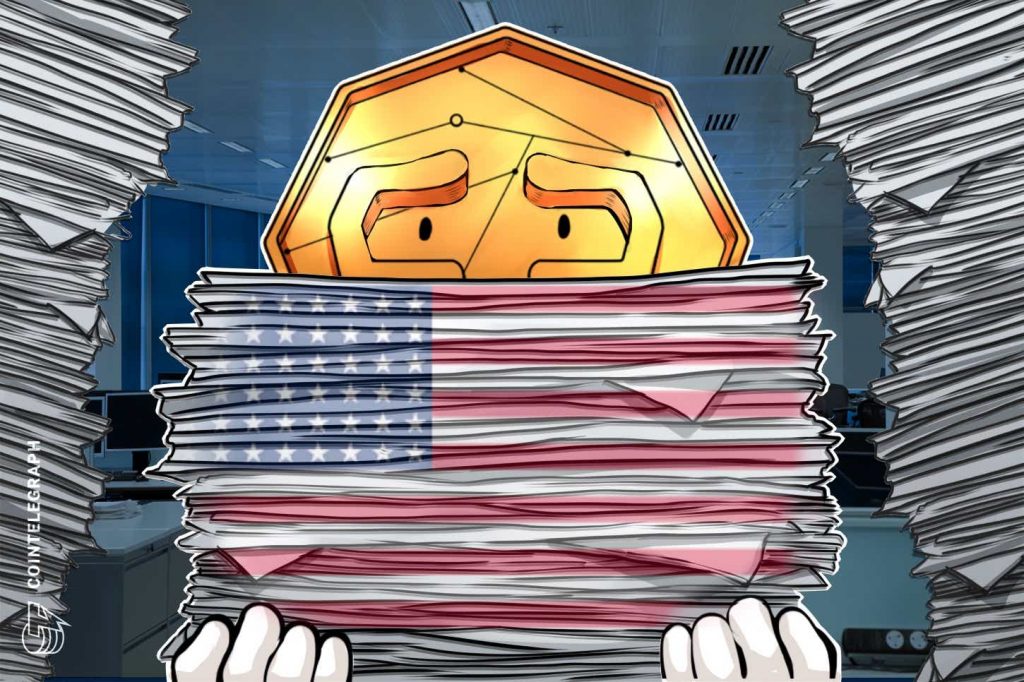
According to Coin Center director, the proposed bill would essentially bypass existing checks and balances on the Treasury Secretary’s authority in surveilling financial institutions, including crypto firms.

submitted by /u/anon43850 [link] [comments]
I’ve heard a lot of environmental criticism of Bitcoin because of its exorbitant use of energy, but they all seem to focus on Bitcoin. edit title: Does processing transactions in and operating… submitted by /u/areintelligent [link] [comments]
Actor, Artist, and NFT entrepreneur Jordi Mollá’s genesis NFT collection ‘Masks’ has officially sold out after launching on January 16th in collaboration with Paul Fisher Gallery and Raini coin. The 6,700 generative Masks minted out in only 18 minutes with a trading volume currently at 509 ETH and 2,200 holders. Interested collectors can browse the collection and purchase the NFTs on OpenSea. Following the sale, Jordi Molla hinted at some exciting news for Masks holders that will soon be released within the MASKS 2.0 ROADMAP, including plans to bring value to genesis holders from Mollá’s physical art. In addition to the public drop, Krews ‘Members Only’ pass holders were able to claim a free mint from the collection- just one of the many perks available to pass holders. Currently, only 50/500 ‘Members Only’ passes have been unlocked but Krew plans to open a few more in the upcoming weeks. As the Masks project continues to unfold, so does Krews partnership with Paul Fisher Gallery. While Paul brings his expertise and marketing efforts in the traditional art world, Krew continues to pilot utility in the Metaverse. This was Krew founders Rambino and Emily Rose Fiander’s first NFT release, and while the next phase of the Masks project is currently underway, they are already preparing for upcoming projects that are soon to be revealed.

Cactus Custody, a qualified institutional custodian solution powered by Matrixport, today announced that it is the first MetaMask Institutional (MMI) integrated custodian able to support MMI’s multi-chain capabilities and all EVM compatible chains. This feature called “DeFi Connector” offered by Cactus Custody enables institutional clients seamless and secure connection with decentralized finance (DeFi) protocols via…
Read more

submitted by /u/coinsRus-2021 [link] [comments]
submitted by /u/ligi [link] [comments]
Cryptocurrencies all across the market have been suffering major downside since the crash. The crypto market saw a couple of hundred billions shaved off its market cap following this. Bitcoin, Ethereum, and others have all seen their value decline significantly in the space of a week. However, in all of this, some digital assets have been hit harder than others. This report takes a look at those cryptocurrencies. Metaverse Tokens Take A Hit The crypto market’s recent decline has been characterized by bloody streets. As expected, bitcoin’s 52% decline from its all-time high has dragged down other digital assets with it. Ethereum, the second largest cryptocurrency by market cap, is down 54% from its own all-time high. While these cryptocurrencies have seen major downsides, others have managed even more dips since then. Related Reading | Market Sentiment Crumbles As Sell-Offs Drags Bitcoin To $33,000 Metaverse tokens which made a big splash when social media giant Facebook announced it was rebranding to Meta and entering the metaverse space, have borne some of the largest weight from the crash. These tokens which rallied to multiple all-time highs in the last couple of months have declined as high as 68% from their all-time highs. Metaverse tokens take some of the biggest hit | Source: Arcane Research MANA, SAND, and AXIE are some of the most popular metaverse tokens and have grown a lot in price in accordance with their popularity. However, with the market crash, they have not been able to hold up well. All of these tokens have lost over 68% since they hit their all-time highs. All three met averse tokens are down, trading at $2.27, $3.27, and $52.66 respectively. What About Layer 1 Cryptocurrencies? Layer 1 cryptocurrencies also took a major hit but have seen a more varied performance when compared to the metaverse tokens. Heavy hitter like Solana (SOL) and Cardano (ADA) were some of the hardest hit Layer 1 cryptocurrencies, both of them going the way of the metaverse tokens with over 68% losses since their various all-time highs. Other lesser known Layer 1 tokens have a different story though. Related Reading | Ethereum Leaves ETH 2.0 In The Past In New Roadmap Rebrand FTM, ONE, ATOM, and Near, popularly referred to as the FOAN, made a splash while others were suffering. Each one of these cryptocurrencies have managed to outperform the market in a time where altcoins are dumping in response to bitcoin’s decline. A look at decentralized finance (DeFi) paints a sadder story. This space that has brought finance products closer to the average investor saw some of the highest declines. Tokens from this space have recorded as high as 80% decline since their all-time highs. The crypto market has managed to hold up against the crash but not before losing substantial value. In total, the crypto market is now down 50% from its all-time high. It now sits at $1.686 trillion at the time of this writing. Crypto market cap crumbles to $1.6 trillion | Source: Crypto Total Market Cap on TradingView.com Featured image from Bitcoin Magazine, charts from Arcane Research and TradingView.com