Category: Cryptocurrency News

Cryptocurrency News and Public Mining Pools

New release of Quant’s blockchain gateway introduces smart contract creation

Quant, a provider of enterprise-grade interoperability for the secure exchange of information and digital assets across any network, platform, or protocol, announced newly announced a new release for its Overledger blockchain gateway, which provides interoperability between blockchains with a single API. Overledger 2.1.7 lets users create smart contracts for payments using tokenized money with an…
Read more

Hashstack Finance Launches Open Protocol On The Testnet To Solve One of DeFi Lending’s Key Issues

The decentralized finance industry needs a severe shakeup where its current borrowing requirements are concerned. Forcing users to put up more collateral than they seek to borrow is not feasible in the long term. Hashstack solves this issue by bringing undercollateralized loans to decentralized finance. Unlocking The Full Potential of DeFi Lending The concept of decentralized lending and borrowing provides a necessary alternative financial approach. Millions of people have little or no access to traditional financial products and services. The underbanked and unbanked population will be the primary beneficiaries of decentralized finance, but only if the requirements are manageable. In the current lending and borrowing landscape, those requirements make little sense. More specifically, users looking to borrow funds need to put up 150% of the borrowed amount – or more – as collateral. That seems strange, as one traditionally puts up a maximum of 50% of what they want to borrow as collateral when dealing with banks. Moreover, the requirement to have more money than you want to borrow does not appeal to unbanked or underbanked individuals. S&P Global put out a study in 2021 depicting how DeFi lending can disrupt traditional systems. However, they also identified certain constraints that have to be addressed. One of the main concerns is the collateral requirements, which hold back the potentially massive growth of lending volumes. Additionally, most current DeFi borrowing involves acquiring more crypto assets rather than solving real-world problems. Changing that narrative is crucial for decentralized finance to gain mainstream adoption. Unfortunately, very few protocols provide solutions to these problems. Hashstack and its undercollateralized loans offer a new take on decentralized lending and borrowing. Hashstack’s Open Protocol Arrives On The Testnet Making decentralized loans more accessible requires lowering the collateralization requirements. Hashstack Finance acknowledges things need to change on that front and aims to facilitate the transition through its Open Protocol. The new DeFi lending protocol offers non-custodial and secure undercollateralized loans with up to a 1:3 collateral-to-loan ratio. It is a welcome change from the average 1.5:1 collateral-to-loan ratio found in today’s DeFi industry. More importantly, users can withdraw up to 70% of their collateral after acquiring a loan. The remainder of the collateral and acquired loan are in-platform trading capital, giving users more flexibility over their funds. Being able to borrow $1,000 with roughly $333 in collateral paves the way for broader mainstream adoption of decentralized finance. Accelerating the growth of DeFi lending is crucial, especially where mainstream users are concerned. Another crucial benefit of Hashstack is how it integrates with existing DeFi solutions. For example, users can access all of PancakeSwap’s market swaps and improve their loan utilization. In addition, borrowers can swap borrowed tokens into any other currency supported by this decentralized trading platform. For example, open Protocol supports BTC, USDT, USDC, BNB, and HASH on Binance Smart Chain, Ethereum, and the Avalanche C-chain. Conclusion The advent of undercollateralized loans changes the public perception of decentralized finance. Removing the hurdles to adoption paves the way for the global adoption of these innovative protocols. Moreover, it helps the industry achieve its goal of being a viable alternative to traditional finance, especially for borrowing and lending. The approach by Hashstack Finance shows collateral requirements for DeFi loans do not need to be as high as they are today. Moreover, its integration with DEXes like Pancakeswap creates many exciting opportunities. Modularity is a crucial aspect of decentralized finance, and integrating various protocols’ technology into one user interface makes for an appealing option.

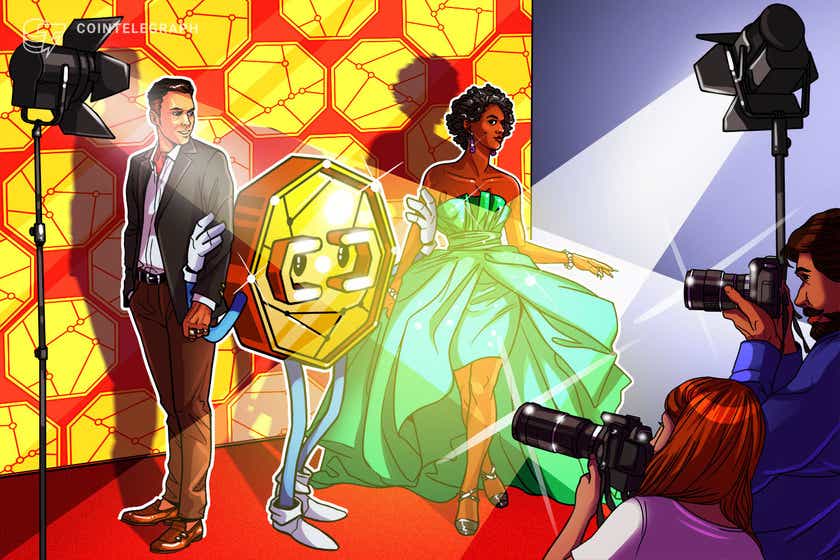
Stop listening to celebrities for financial advice, says Binance Super Bowl campaign

Instead the platform encourages users to do their own research, and trust in themselves when it comes to investing in cryptocurrencies.

Law Decoded: Tangible wins, new menaces and the global crypto taxation drive, Feb. 1–7

Crypto advocates celebrate wins, the Treasury and SEC seek to introduce crypto-unfriendly rules, and governments rush to levy digital asset taxes.

What Exactly Can You Do With NFTs? How To Buy, Where to Store, and Common Uses

NFTs have taken the internet by storm over the last 18 months. From something completely unheard of to a market that’s worth over $40 billion, NFTs have had an incredible year. But what exactly are NFTs, and more importantly, what’s the point of them? While some people think that NFTs don’t have any real purpose, many industries are incorporating them in innovative ways. This is especially true within the gaming industry, which has taken to using NFTs as unique skins, methods of improving the diverse styles of play within gameplay, and digital methods of trading. In this article, we’ll be explaining what NFTs are and breaking down how you can buy one, where they are stored, and the various functions associated with them. Let’s get right into it. What exactly is an NFT? NFTs, which stands for Non-Fungible Tokens, are digital assets that are stored in the blockchain. When a person buys an NFT, they’re buying ownership, with proof of their digital ownership being stored online. Due to the blockchain technology that’s used for this process, which is incredibly secure, NFTs are a safe digital asset and are famously difficult to steal. Considering that NFTs can be anything digital, people are seeing everything from digital art to GIFs turned into NFTs and sold online. Launched and sustained on the Ethereum blockchain, every single NFT represents a digital asset that cannot be duplicated, which is why people are paying so much for them. How do you buy and store NFTs? Most commonly, NFTs are sold on NFT marketplaces. These are systems where people can either directly buy or bid on NFT auctions. Additionally, they act as digital auction houses, exhibiting NFTs that are about to go on sale for everyone to see. Currently, the three biggest NFT marketplaces are OpenSea, Rarible, and Nifty Gateway. Once a person buys an NFT on these platforms, their proof of sale is then sent to the Ethereum blockchain. Imagine this as a series of blocks that, once placed down, cannot be picked back up or changed. The immutability of blockchain ensures that once someone buys an NFT, their name is safely stored on a chain. If someone were to look up an NFT in the blockchain, it would clearly state the owner’s name on it. While digitally, the original NFT and its owner’s details are stored on the blockchain, the NFT will be accessible to see from the owner’s wallet. These wallets, just like crypto wallets, are secured using a set of digital encryption pathways, as well as a private key. Once purchased, NFTs can also be transferred off NFT marketplaces onto cold storage hardware wallets on a third-party platform. These offer advanced security for digital assets. What can you do with an NFT? NFTs haven’t skyrocketed in public attention simply because they’re new. On the contrary, there is a range of applications for NFTs that help boost their value, providing services alongside also just being interesting to look at. While there is a range of uses for NFTs, we’ll be focusing on the following three: Games Digital art Collectables Let’s break these down further. Games One of the most well-known games that’s run directly in line with NFT purchase and renting is CryptoTanks. In this game, the classic 8-bit Tanks game has been reconfigured, setting up either team vs. team or battle arena-style gameplay. In this game, a user will move a tank around the screen, attempting to destroy other players without being blown up themselves. NFTs come into this game in two ways: providing visual diversification for users and granting certain abilities that are attached to specific NFT designs. A user will be able to buy or rent an NFT tank and then put this NFT onto their base tank as a unique skin. This will distinguish them in games and bring something new to their playing experience. Additionally, CryptoTanks also ensures that every NFT tank comes with a different weapons set, movement speed, customization panel, and armor level. Due to this, alongside visual motivation for buying an NFT on the platform, users are also motivated to purchase or rent a tank with good in-game statistics. Considering that CryptoTanks runs on the Polygon ecosystem, it has high processing speed, eliminating the major annoyance of lag that traditional gamers experience. This is just one example of how blockchain technology is shifting the use and application of gaming worldwide. Founded in April of 2021, CryptoTanks is a great example of how NFTs can be woven into the world of gaming to bring an exciting new layer to the platform. Digital Art Perhaps the most well-known use of NFTs is simply to be admired due to their unique artistic features. There is no denying that NFTs have changed the art world forever, significantly boosting the opportunity for artists to make a living with their art. What once would have taken large audiences and devoted fans now only takes a little bit of luck. If you strike the right chords when uploading art to an NFT collection site like OpenSea, then you can make a significant amount of money from selling your art. People worldwide have turned to NFTs as a new form of dealership, buying specific pieces to ‘own’ them. In fact, this digital form of art has already made a significant contribution to the world of auctioning. Most dramatically, an NFT minted (made) by the artist ‘Beeple’ sold for $69 million through the internationally renowned Christie’s auction house. This wasn’t due to the artist already having a big name, in fact, the bidding started at only $100. This new digital platform of art is also incredibly accessible. While auctions used to be geography-specific, often only receiving guests and bidders from the local area, NFT markets are completely run online. This move towards the digital space means that anyone, at any time, anywhere in the world, can log onto an NFT platform and browse through the artwork currently up for sale. Once you purchase an NFT, you officially own it, with your information being stored in the blockchain. Just like normal art, you don’t actually own the copyright to the art, but you’ll still be able to admire the NFT nonetheless. Collectables Alongside collectibles in gaming that somehow change the appearance or characteristics of your characters, NFT collections have also become a fairly famous part of the market. Creating NFT collections is where an artist will make a certain number of NFTs that all have the same theme or are related to one another. A famous example of this would be the Bored Ape Collection, which is a finite collection of 10,000 ‘Bored Ape’ images. Each of these images is an ape character with a different skin color, background, and different costume elements. Most recently, a Bored Ape sold for $2.8 million at auction. Whole sites are now designed to accommodate for NFT collections, with Starly being one of said sites. Every week artists release their collections on the platform, always centered around a central topic or idea. Most recently, Melos Studio released an NFT collection that centered around the life and achievements of David Bowie, with trading card designs representing moments in his career. These collections are released on a certain date, with buyers flocking to buy and then auction NFTs that are a part of that set before the sales period ends. This popular community form of trading is akin to trading card resales, with each NFT being housed in a trading card frame. The next collection that’s set to be released on Starly is by PhaseRunner and centers around celestial beings. Collections are a core part of NFT functionality due to one core idea: scarcity. The idea of only having a certain amount of something creates the idea of demand. Especially in the case of Bored Ape, each of the pieces is now skyrocketing in value as famous people flock to claim their own ape. With 10,000 pieces, there is enough for many people to get something they like, but not enough to the extent where just anyone could buy one. The link between NFT collections and scarcity is the core element that drives up their price, with investors flocking to buy NFTs in order to diversify their portfolio and use NFTs are a financial tool. Final Thoughts on NFTs Whether just a financial investment into a new stream of digital art, a way of broadening your portfolio, or a way of bringing a fresh element to your favorite games, NFTs have a wide variety of uses. No matter if you’re well-versed in the world of NFTs or you’re just hearing about them, why not give the most accessible form, gaming, a go? You’ll be able to start playing without spending a cent, with NFT gaming platforms like CryptoTanks allowing you to earn NFTs while you play.      

Sequoia just invested 450 million dollars into Polygon, This is not only big for Polygon it is big for Ethereum too.

This news literally just dropped on CNBC. Sequoia The Silicon Valley venture capital firm led a $450 million investment in Polygon. I think this is massive as far as mass adoption for Polygon is concerned. A VC like this putting in this kind of money into your product speaks volume. These are people who have…
Read more

Cosmos Records 20% Gain, What’s Behind The Boom In Its Ecosystem

The Cosmos ecosystem has seen an explosion of interest in the past year. Projects like Terra (LUNA) have increased its numbers of users and will continue to boost its position in the crypto space as its ecosystem keeps expanding. Related Reading | Cosmos (ATOM) Jumps 36% WTD: What’s Driving Its Price Rally? As of press time, Cosmos (ATOM) trades at $32,57 with a 7% profit in the past 24 hours. The cryptocurrency follows the general sentiment in the market, as Bitcoin (BTC), Ethereum (ETH), and other large cryptocurrencies trend to the upside in lower timeframes. In an official blog post, the team behind Cosmos recently announced the new project to be release as testnets in 2022. The team celebrated Terra, Secret Network, Osmosis, and other projects in the ecosystem and announced others that will be introduce this year. The team said: Many up-and-coming projects are running testnets and incentivized testnets that will precede their debuts to mainnet this year. A testnet, as explained by the post, are a widely use tool for internet development. They let developers test upgrades, products, and more before deploying on a mainnet. A test network or testnet simulate that original environment to carry out such test under similar conditions as if they were already deployed. Developers and users benefit from testnets because it allows the former to discover and fix bugs and issues, improve user experience, and the latter to leverage a clean and battle tested software. The Cosmos ecosystem holds over $100 billion in terms of total value locked, testnets provide an additional layer of development to guarantee its safety and optimal stability. The team said: Over the years, Cosmos testnets have proven to be extensively successful in many areas, such as uncovering issues with the consensus engine, state machine, and even the operational setup of validators. Top Projects To Watch On Cosmos For 2022 Amongst the projects cited by the Cosmos team, there is Archway. This incentivized smart contract platform will provide the ecosystem with CosmWasm integration and enable direct developer reward into the protocol. In that way, developers, users, and early investors will receive a share of the rewards from launching a product. Archway will launch “Augusta”, its first incentivized testnet in March 2022. Users will have a chance at earning rewards during this tesnet’s different stages. In addition, Archway will be accompanied by Celestia, Cosmos’ first “modular blockchain network”. This platform will allow developers to deploy their own virtual machines without, according to the post, having to “bootstrapt their own consensus network”. Thus, bringing new dApp possibilities into the ecosystem. The project is currently on its devnet phase, but once deployed it’ll let applications to maintain a high level of sovereignty and security with a high degree of scalability. Celestia’s public testnet is set to be rollout at some point in Q2, 2022. Moreover, the Cosmos will see the launch of Tgrade, the “first regulated DeFi platform”, the protocol will operate with a mix between Proof-of-Stake (PoS) and Proof-of-Engagement (PoE). Unlike regular PoS project, Tgrade will reward all of its community via its PoE mechanism. Related Reading | Terra (LUNA) Holders Approve New Sports Sponsorship Deal Finally, this ecosystem will see the rollout of Umee with an incentivized testnet for its lending and borrowing platform. However, many more projects will be introduced via tesnets and on the mainnet making this network one to continue to watch on 2022 and beyond.

Does anyone mine with any 570/ 580 AMD cards for ravencoin?

I have a mixed rig with both 570s and 580gb 4gb cards and I cannot seem to get them to mine. No mining program through windows seems able to keep them mining unless I use Hiveos. Has anyone had this problem? Any tips to make it work? submitted by /u/Manqaness24 [link] [comments]

Where do you think crypto will be in 30 years? Should I be putting Ethereum in my retirement account?

submitted by /u/One_Intention5481 [link] [comments]

Is there a script or standalone project to generate Ethereum wallets?

I found this standalone project that can run offline written in JavaScript that allows generating Ethereum wallets. https://github.com/MyEtherWallet/etherwallet/releases This is fine as it is, the only thing is, its no longer supported and perhaps there is a newer project of similar sort? submitted by /u/PeteMarcus [link] [comments]