

European watchdog lists crypto next to lawyers, accountants as an AML threat
The annual supervision report from MONEYVAL concluded that 18 of the 22 jurisdictions have an insufficient level of compliance with AML standards.
The annual supervision report from MONEYVAL concluded that 18 of the 22 jurisdictions have an insufficient level of compliance with AML standards.
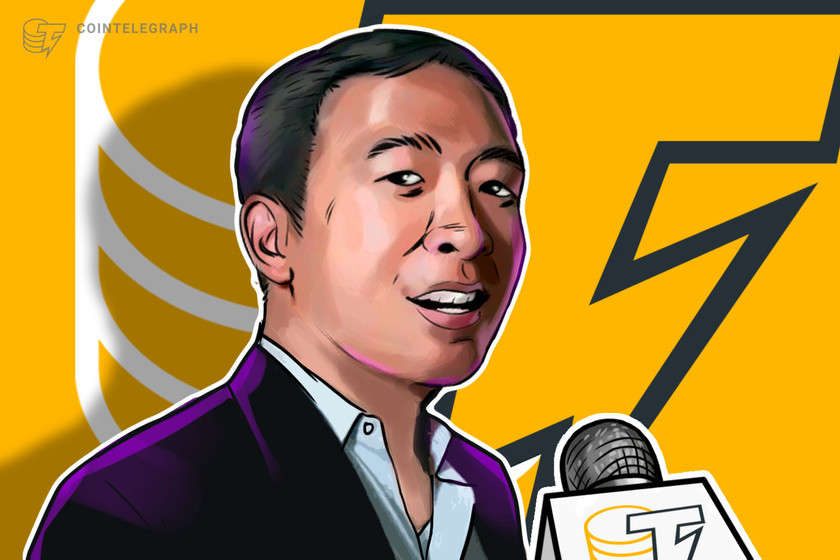
Cointelegraph spoke with former U.S. presidential candidate Andrew Yang at Crypto Bahamas to learn more about his thoughts on crypto and politics.
submitted by /u/DailyGweiBot [link] [comments]

The emergence of blockchain games has flipped the gaming industry, putting players in charge of the decisions rather than developers. Their rise has been exponential, with over 398 active blockchain games currently floating in the market. The industry’s influence has risen to the point that it now accounts for 52% of all blockchain activity. The new entertainment facilitates NFT creation, trading, and ownership capabilities. Blockchain games give players complete ownership of their in-game assets while also allowing them to use those assets outside the games. Axie Infinity, for example, is a blockchain game allowing players to own and trade in-game assets outside the Axie ecosystem for cryptocurrencies. Although hundreds of these games have emerged, there is a significant problem that many gamers are experiencing, i.e. good gameplay. Most blockchain games are barely playable and severely lack the quality traditional gamers expect. Crpytokitties and Axie Infinity are some examples of these. However, here are some games that can potentially be a solution to that problem: Delysium Delysium has the most popular game modes accepted by the largest group of gamers, like battle royale, MMORPG, open-world, UGC, etc., and allows players to collect loot boxes by participating in various game types, such as PVE and PVP. Compared to other games, Delysium is more inclusive with a lower barrier of entry and an open world for co-creation of game assets, game setting and ecosystem, which express a more profound spirit of web3 and able to attract more players and guilds. Delysium is backed by Galaxy Interactive, Republic Crypto and Alameda Research etc. Players may then sell their earned items on the Delysium marketplace, improve their character and equipment, or make user-generated content with them. The game’s base on Polygon Network makes it fast, which is needed for its high-resolution gameplay. In addition to its play-and-earn mechanism, the game also features a bedrock of in-game NPCs powered by Deterrence, an Artificial Intelligence (AI) layer for NFT and virtual beings. Notably, these AI-driven NPCs can be purchased or rented by the player and set to work to complete tasks and earn passive income for the user character. It’s not easy to develop a high-quality AAA open game on web3 and make it playable, but Delysium has done it. Only two months after the first round of funding for private sales, Delysium has already announced the launch of Pre-Alpha Test in the first week of May. The Pre-Alpha Test will last two months and invite nearly 5,000 players, which is the largest, fastest and furthest going Pre-Alpha Test in web3 AAA games ever, especially compared to Star Atlas, which is still in the trailer stage. In particular, from this Pre-Alpha Test to the following Alpha Test in July and Beta Test at the end of the year, Delysium will continuously host large-scale testing and go on live streaming with the web2 professional player teams directly, which is the first initiative of the blockchain industry. If the game is developed smoothly, it will be possible for AAA blockchain games that break the wall between web2 and web3. GamePlay Trailer: Delysium – Gameplay Trailer | Fight for Freedom Illuvium Illuvium is a truly playable metaverse AAA game project that includes a 3D setting with over 100 distinct Illuvials strewn across the virtual cosmos. A team of world-class artists designs the game. The game was founded in 2020 and is still being developed by Kieran Warwick and seasoned game designer Aaron Warwick. Kieran Warwick and Aaron Warwick are also siblings of Kain Warwick, co-founder of the popular DeFi platform Synthetix. Moreover, the project is backed by IOSG Ventures, LD Capital, YBB Foundation, Delphi Digital, Stake Capital, Moonwhale Ventures, Lotus Capital, BlockSync, Yield Guild Games, and Bitscale. Beyond that, the game boasts a slew of notable collaborations, including ones with SandBox, 1Inch, Aave, and Bitcoin.com, to name a few. The game is set to launch with its private beta version already live. A public beta launch will follow this in the coming weeks. Illuvium’s breathtaking graphics and gameplay have already attracted over 250,000 fans on social media. Blocklords Blocklords is a blockchain strategy game that allows players to create heroes, build armies, and conquer a medieval land in the metaverse. The game also involves players making governments through commerce, conquest, and the collection of sales taxes. The in-game characters are digital assets whose qualities are established by the experiences and actions of their players throughout the game. Players may play everything from a knight to a raider, a farmer to a merchant, and they can monetize their unique skills through a player-driven economy. Planet Mojo Planet Mojo is a player vs player (PvP) cross-platform auto chess game reinvented for blockchain, allowing players to own their game characters (as NFTs) and play to earn in ongoing tournaments. Industry professionals develop the game with backgrounds at LucasArts, EA, Activision, and Happy Giant. It is one of the few gaming projects with a vision to save the planet. And to align with this vision, the game has partnered with the nonprofit One Tree Planted to offset the environmental costs of its Moj-Seed NFTs. For every NFT purchased by players, the game will sponsor the planting of one tree in a forest loss area. The game has started an allow listing event for these NFTs, which is currently live. The allowlist winners will be revealed on May 5, 2022, who will be the first to receive the Moj-Seed NFTs. These tokens will offer holders early access to the game and various other valuable benefits. Source: Planet Mojo Final Thoughts While there are thousands of blockchain games available and in production, it’s fair to say that only a handful of them provide high-quality gameplay that traditional gamers can resonate with. However, we hope this list may have introduced some gems not everyone is aware of. A combination of actual AAA gameplay designed on the Web3 and stunning graphics sets them apart from the rest. Facing the multiply doubts about Web 3 games from traditional gamers, high quality and rapid development to satisfy the player’s expectation might be the only way to break the wall. Although it’s challenging to produce and implement AAA games super quickly, projects such as Delysium have succeeded in doing so. Beyond the superiority of truly playable, Delysium designed accessible game entrances that fewer up-sells and reduce barriers to playing games, which could potentially be the key to bridging the gap between Web2 gamers and Web3! After all, if the traditional gaming industry can be worth $200 billion without blockchain, imagine the potential it can have with blockchain and cryptocurrency?

submitted by /u/wannabechampfx [link] [comments]

submitted by /u/pm_me_your_pooptube [link] [comments]
The blockchain industry is at the forefront of innovation, with new ways to harness this secure distributed ledger technology in various areas of traditional business. A key feature of conventional blockchains is the ability of any entity to verify the integrity of the blockchain ledger by executing the same algorithm that was used to generate it. What are quantum-safe blockchains? Quantum computers will be able to execute algorithms significantly faster than classical computers, enabling them to break most cryptographic algorithms. Attackers with a quantum computer might be able to break into any system that uses today’s encryption algorithms and cannot evolve in time. The Post-Quantum Blockchain is the next step in blockchain technology, leveraging the power of post-quantum cryptography to ensure that data is stored securely and cannot be tampered with, so they can rely on the integrity and security of their data. In contrast to existing blockchains, which rely on the pre quantum RSA, post-quantum blockchain uses encryption algorithms like NewHope, NTRU, Frodo, SIDH that are more secure against current quantum computers. Why does the modern blockchain lack efficient infrastructure? While talking about the security of the blockchain we also have to look at the scalability of the blockchain in order to execute the smart contracts on it. Here comes the impossible trinity into play which says that every blockchain network is constrained by this popularly known Scalability Trilemma – scalability, security, and decentralization. Theory suggests that a blockchain network is trying to max at one factor at the expense of the remaining two factors. Eg. If a blockchain network focuses on increasing scalability, then the security and the decentralization of the particular blockchain get hit. This has been affecting several Tier 1 blockchains like Solana (SOL) and Polygon (MATIC) which recently experienced a situation where a high number of transactions on their network caused it to overload the RPC nodes which further causes multiple transactions to be canceled and causes the network to jam. This has caused multiple projects that are built on these blockchains to crash as well. The issue with current blockchain appears to have been caused by too many transactions being processed at once—about 400,000 in total. The average capacity that Solana (SOL) can process is around 65,000 transactions per second and this resulted in the network becoming congested and crashing. Most recently, Solana mainnet beta fell out of consensus and the validator network couldn’t recover. This was majorly due to the botting on the Candy Machine NFT minting tool ,there were four million transaction requests and 100 gigabits of data every second which is a record high for the network. Here’s how blockchain’s scalability issue affects investors and traders This greatly impacted the traders, investors, gamers and many others using the particular blockchain network as it can cause losses and delays in transactions. This could have a possible detrimental effect on projects looking to build further on the blockchain as this could easily lead to the failure of the project because of the congestion on the blockchain. This sort of scalability issue needs to be addressed when global adoption kicks in. Many traders have this network fee slippage issues due to insufficient infrastructure to support the mass traffic. That is where a solution of future-proof architecture must work equally well with both classical cryptography and post-quantum cryptography. To achieve this goal, Cellframe product pioneered the technology that groups transactions into cells. Instead of verifying every transaction, Layer 1 mainnet verifies these cells. As such, computational resource consumption is reduced dramatically: a network needs to verify one cell instead of 100 transactions. Addressing the future of post-quantum computations, Cellframe promotes itself as a blockchain-agnostic platform (“Layer Zero”) that can interact with Bitcoin (BTC), Ethereum (ETH) and so on. This design unlocks unmatched opportunities in terms of scalability and accessibility. Cellframe offers the same level of scalability for all associated decentralized applications (dApps), DeFis, NFT marketplaces, play-to-earn ecosystems, and so on. New “Cell Chains” can be added to this architecture again and again. Within the ecosystem, they work like shards of NEAR Protocol or Ethereum 2.0. Every element of the system can be easily isolated in the event of an attack. Supersingular curves and lattice permutations are used as the basis. Implementations of such algorithms for public key communications are already available on the network. As such, the system has a virtually infinite bandwidth, impressive flexibility and unmatched scalability. Creators of cells can mitigate scalability issues by launching additional “cells” on the same infrastructure. In different systems, cells can be integrated into various use cases. Cellframe instruments are suitable for both entrepreneurial and retail use.

Bitcoin was trading marginally higher on Wednesday, as crypto markets returned to the green ahead of the Fed meeting. ETH also rebounded in today’s session, moving away from its long-term support level in the process. Bitcoin BTC was trading higher on Wednesday, as bulls re-entered the market ahead of today’s Federal Reserve rate decision. Following […]

After passing community vote, Polkadot v0.9.19 is now enacted. This is a HUGE upgrade because it enacts Polkadot's new capability of XCM (the Cross-Consensus Message Format). Essentially, XCM will allow cross-chain communication and teleporting of assets in the Polkadot eco-system. Put simply, this is a breakthrough in interoperability. As stated by Polkadot's Dr. Gavin Wood:…
Read more
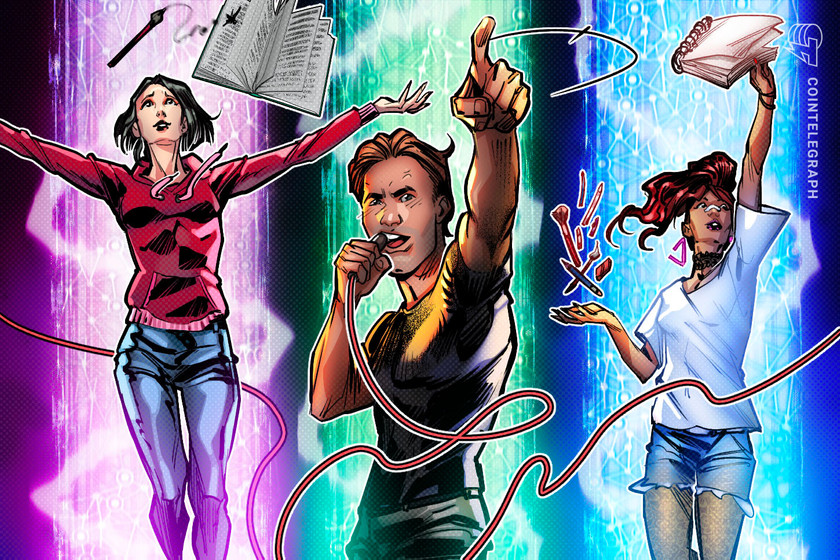
Independent creators and artists should feel empowered by decentralization and not play by Big Tech’s rules, especially in the Metaverse.